

Why Timbi
Love—not lectures
Children need to feel safe, seen, and loved.
This is even more true for children living with a parent's addiction—
because they often don’t.
Timbi Talks was built from that truth—and from the science that supports it.
Instruction is Not Prevention
For decades, most prevention programs aimed at young people were built on a simple—but flawed—assumption: lecturing children about drugs and 'good choices' would lead to better outcomes. Research has consistently found that while these approaches increase knowledge, they have little effect on behavior.
The science points in a different direction.
The American Academy of Pediatrics and the CDC now recognize that Positive Childhood Experiences (PCEs)—including safe, stable, nurturing relationships and a sense of belonging—help buffer the effects of childhood adversity (ACEs) and promote lifelong health and resilience.
Information matters. Children need honest, age-appropriate explanations that help them understand what is happening and reassure them that they are not to blame. But information alone isn't enough. Children also need caring adults who help them make sense of it.
Connection, not instruction, is the active ingredient in prevention.

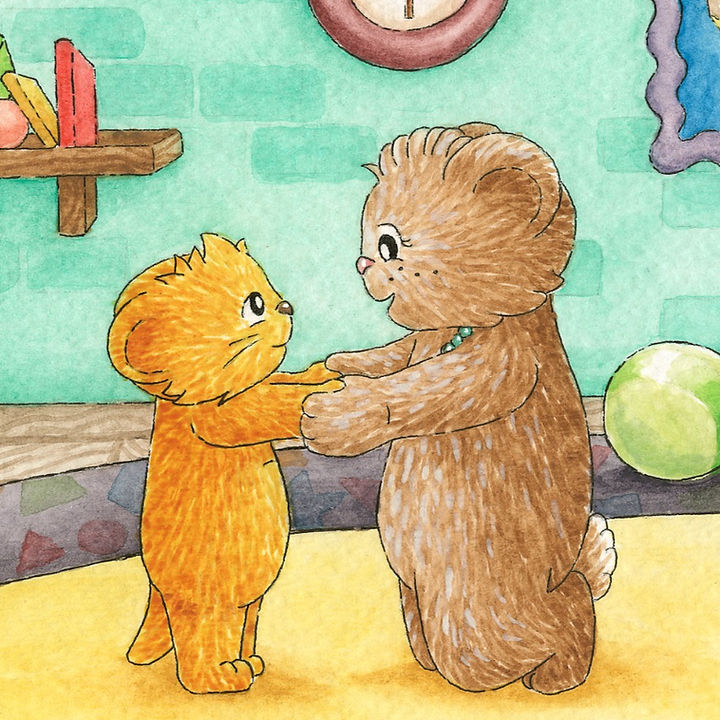

What Timbi fosters—and how
Grounded in the science of Positive Childhood Experiences:
-
trauma-informed care,
-
co-regulation and attachment research,
-
neuroscience
Timbi helps children build the protective factors research has shown matter most.
Emotional literacy
Children learn to recognize and name their feelings—an important first step in learning to manage them.
Co-regulation
Warm, responsive relationships help calm a child's nervous system and create the safety needed for learning, healing, and growth.
Reduced self-blame and shame
Children learn that they did not cause a parent's addiction, they are not alone, and they deserve love and support.
Hope, resilience, and agency
Simple, evidence-informed practices help children build confidence, emotional regulation, resilience, and a growing sense that they can cope with difficult experiences.
Timbi isn't lecturing children about what choices to make years from now.
Timbi helps children build the inner resources that make healthier futures possible.
Built from the science
Timbi Talks was not built around a curriculum or a program model.
It grew from one question:
What actually helps children?
Between 2010 and 2014, Janet Hellier, MS, MHC, completed graduate work in counseling with a concentration in positive psychology and resilience. Those ideas helped shape the practical, relationship-centered approach that became Timbi Talks.
As the science has evolved, it has increasingly supported many of the same evidence-informed practices already embedded throughout Timbi's materials.
Timbi knew children needed
Positive Childhood Experiences
long before the CDC gave them a name.


For organizations supporting
children and families
We know every dollar matters. Our pricing reflects our nonprofit status—we're simply covering our costs so more children and families can benefit from Timbi.
Timbi Talks partners with health departments, schools, libraries, CASA programs, tribal organizations, recovery programs, and child advocacy organizations across the country.
Training materials are available now, and a comprehensive training program is in development.
We're committed to making these resources as accessible as possible. We'd love to talk about how Timbi can support the children and families you serve.
Healing begins with Hope.
Prevention begins with Connection.
Learn how the research behind Timbi's approach helps children build resilience—and why connection is one of the strongest protective factors we can offer.